Conditions · Plantar Fasciitis
That stabbing heel pain in the morning isn't just a foot problem. Your heel is the bottom anchor of a line of tissue that runs all the way up your back.
Book a Session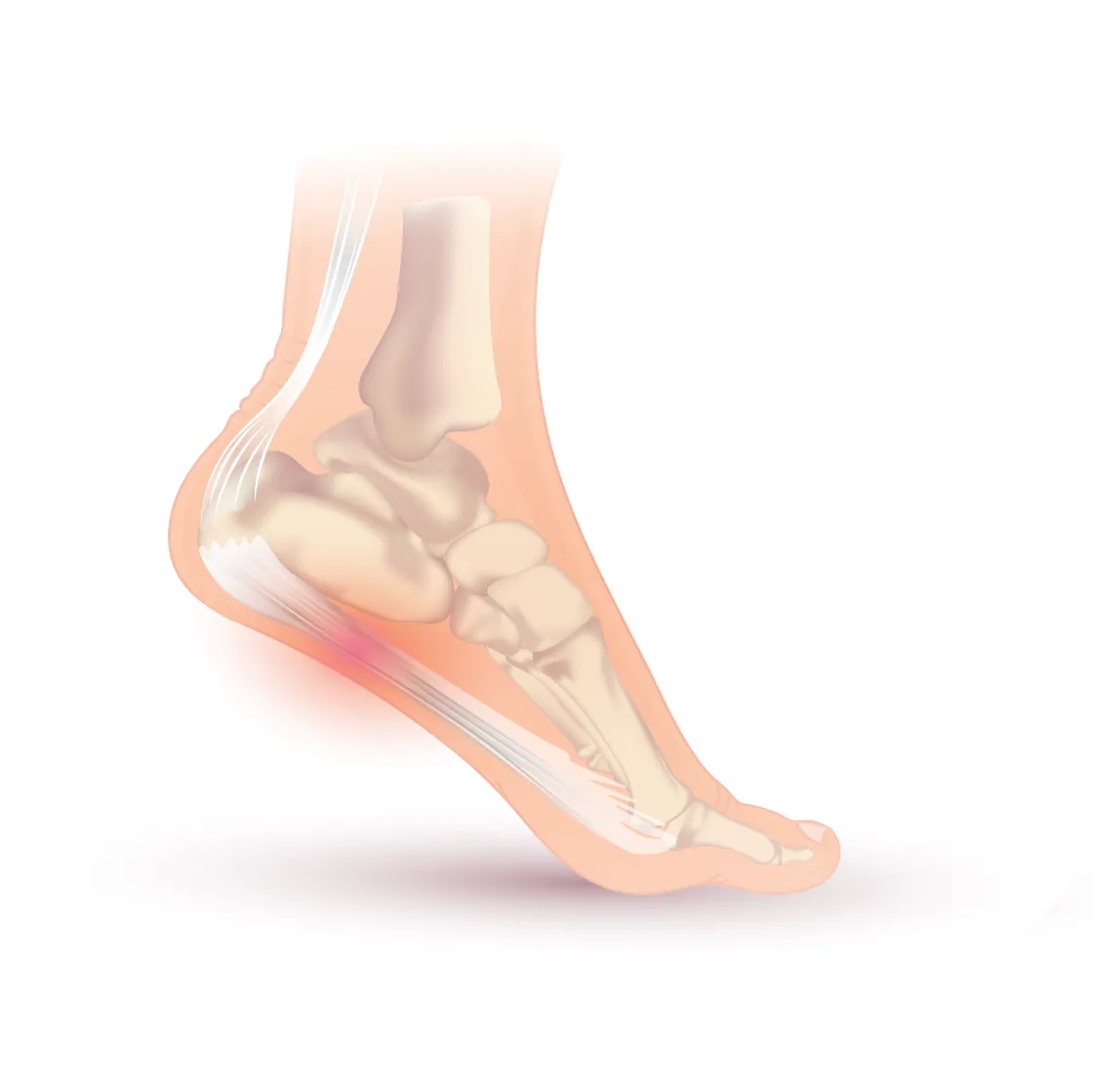
Illustration: InjuryMap via Wikimedia Commons, CC BY-SA 4.0
You swing your feet out of bed, stand up, and your heel lights up. It eases after you walk around a bit. Then you sit for an hour, stand up again, and it's right back.
That pattern is classic plantar fasciitis. The thick band of tissue on the bottom of your foot, the plantar fascia, gets irritated where it attaches to your heel bone.
Rest, ice, and new shoes can take the edge off. But they treat the spot where it hurts, and the heel usually isn't where the strain starts.
Your plantar fascia is the first link in a long chain of fascia that runs from the bottom of your foot, up your calves and hamstrings, along your spine, and over the top of your head. When anything along that line gets tight, it pulls on the anchor point. The heel is that anchor.
Short, tight calf muscles pull up on the heel with every step and leave the fascia under constant tension.
An arch that collapses or a foot that rolls in stretches the fascia a little further on every stride.
Tension higher up the back of the leg feeds down into the same line and adds to the pull at the heel.
Super pulsed cold laser over the painful attachment helps quiet the irritation, so you're not dreading every first step.
Hands-on work and laser along the calves and the back of the legs ease the pull on the heel from above.
We look at how your foot lands and how your weight moves through it, so the heel isn't taking the same hit tomorrow.
Laser for plantar fasciitis has been studied in runners, one of the groups hit hardest by heel pain. In a published case report, both runners treated responded to laser therapy. That's a small study, but it lines up with what we see when we treat the whole line instead of just the heel.
Your protocol is matched to your healing phase, so a fresh flare is handled differently from heel pain you've had for a year.
If you've tried inserts, stretches, and new shoes and your heel still hurts every morning, the pull is probably coming from higher up. An assessment traces the whole line.
Book a $75 Session See Membership & Packages Ask the Organic MechanicIf your heel pain started with a fall or a sudden pop, if you can't put weight on it, or if you have numbness or tingling in your foot, see your doctor before starting treatment.
