
Conditions · Frozen Shoulder
Some shoulders that can't lift overhead aren't stuck in the joint at all. They're being held back by tissue somewhere else. Knowing which one you have changes everything.
Book a Session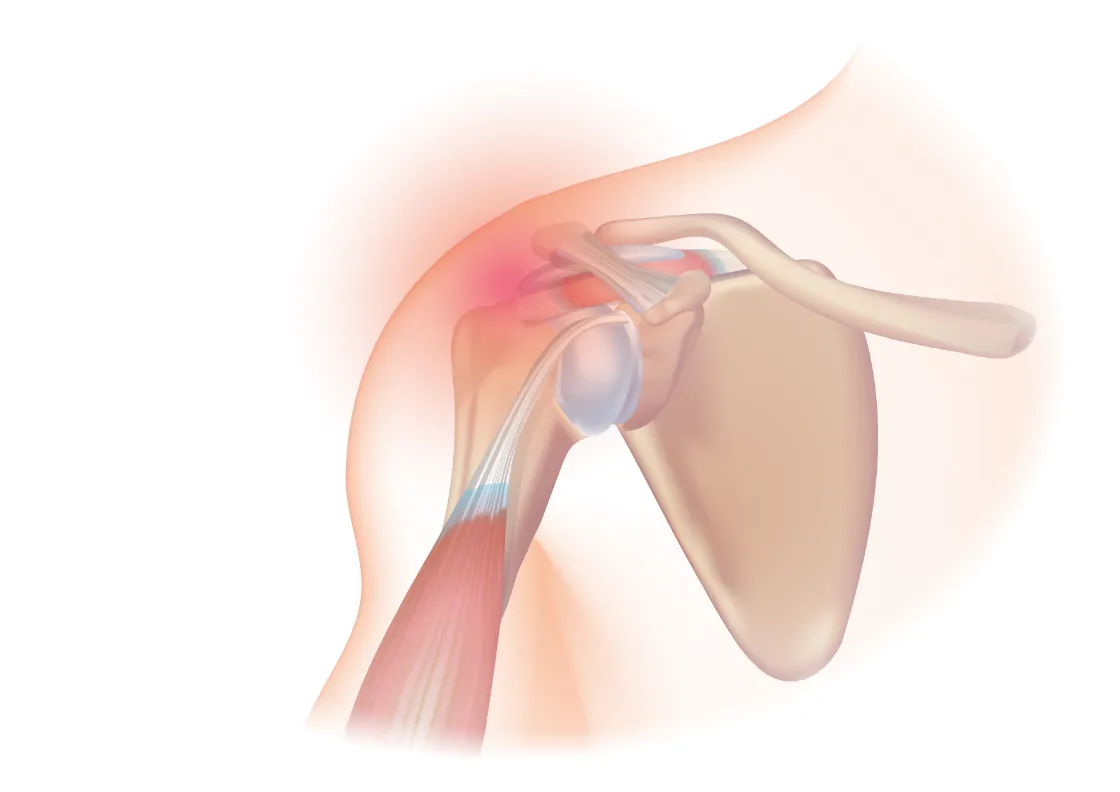
Illustration: InjuryMap via Wikimedia Commons, CC BY-SA 4.0
You can't reach the top shelf. Putting on a jacket hurts. Fastening anything behind your back is out of the question. Sleeping on that side wakes you up. Somebody told you it's frozen shoulder and it'll take a year or two to thaw.
Sometimes that's exactly right. Sometimes it isn't.
The capsule around the joint itself gets inflamed and thickens. It usually comes on gradually and moves through stages of freezing, frozen, and thawing over many months.
The joint is fine, but tight tissue somewhere else is holding it back. It looks like frozen shoulder, but it can respond much faster once the tether is found and released.
One patient came to us with shoulder pain and limited overhead motion. They'd been diagnosed elsewhere with frozen shoulder, and the standard treatment was being recommended.
The assessment found the real problem wasn't in the shoulder. The rib cage on the opposite side was restricted, and the breathing muscle underneath had become uneven. A big back muscle connects the ribs to the upper arm, so the stiffness in the ribs was pulling on the shoulder through that connection.
Treatment went to the ribs, the breathing muscle, and the tissue connecting them to the shoulder. No aggressive shoulder stretching. For that patient, motion came back and the pain resolved. The shoulder wasn't frozen. It was tied down. Read more case studies.
We test how your shoulder moves and check your ribs, breathing, upper back, and neck for anything pulling on the joint from a distance.
Super pulsed cold laser helps settle inflammation and pain so the muscles around the shoulder stop guarding so hard. A published case report described a frozen shoulder that was relieved with laser therapy.
Hands-on work goes wherever the restriction actually is. That might be the shoulder, or it might be the ribs on the other side of your body.
Your protocol is matched to your healing phase. A true frozen shoulder still takes time, and we'll tell you honestly what to expect.
If you've been told to wait a year for your shoulder to thaw, it's worth checking whether something else is holding it down. An assessment can tell the difference.
Book a $75 Session See Membership & Packages Ask the Organic Mechanic